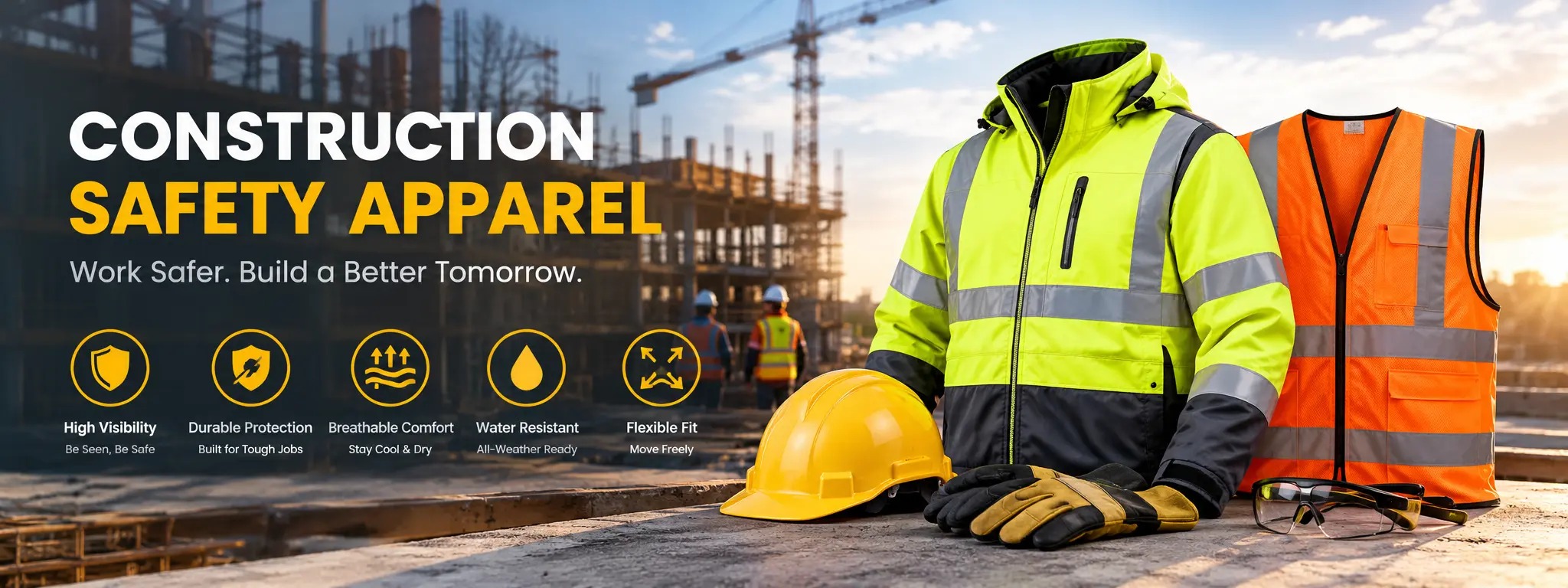
A construction site never stands still. Cranes move overhead, trucks transport heavy materials, workers climb scaffolding, and teams carry out demanding tasks in changing weather conditions. In this fast-moving environment, the right Construction Safety Apparel is more than a uniform. It is an important part of a worker’s personal protective equipment (PPE) and an essential consideration in everyday jobsite safety.
From high-visibility vests worn near moving vehicles to durable workwear used during material handling, Construction Safety Apparel serves different purposes across the construction industry. Some garments improve visibility, some help protect against abrasion and weather, and others are designed for specific hazards such as heat or chemical exposure. The right choice depends on the work being performed, the environment, and the protection required.
For construction companies, contractors, and PPE purchasing teams, selecting Construction Safety Apparel involves more than comparing colors and prices. Fabric quality, garment design, compliance documentation, comfort, durability, and supply consistency all affect the value of a purchase.
So, what makes Construction Safety Apparel essential on every jobsite? Here are seven critical reasons, along with practical guidance to help buyers make better decisions.
| Product | Main protective function | Suitable working conditions |
|---|---|---|
| MK-RX732 Warning Clothing | Visibility enhancement and rain protection | Outdoor construction, rainy weather, roadwork |
| MK-SF002 Cold-Proof Work Clothes | Thermal insulation and cold-weather comfort | Winter construction, cold outdoor sites |
| MK-SF017 Heavy Duty Insulated Fire Fighting Suit | Specialized thermal and fire-related protection | High-heat industrial operations and emergency response |
1. Every Jobsite Has Different Risks, and Workwear Must Match the Task
Imagine two workers on the same construction project. One directs vehicles at the entrance, while the other cuts building materials inside a partially enclosed structure. Their working conditions are different, so their clothing requirements should be different too.
This is why Construction Safety Apparel should begin with a clear understanding of jobsite hazards rather than a one-size-fits-all approach.
Construction workers may encounter:
- Moving vehicles and equipment: Workers near trucks, forklifts, and excavators may need compliant high-visibility clothing.
- Rough and abrasive surfaces: Workers handling concrete blocks, timber, or metal components may benefit from durable fabrics and reinforced garment construction.
- Rain, wind, and cold: Outdoor crews may require waterproof outerwear, insulated jackets, or layered workwear.
- Heat and flame hazards: Certain tasks require specialized protective clothing designed and tested for the specific exposure.
- Dust and flying particles: Suitable workwear can provide some coverage, but additional task-specific PPE may be necessary.
The best Construction Safety Apparel is therefore the clothing that matches the actual risks. Ordinary workwear should not be mistaken for certified protective clothing, and no single garment can protect against every construction hazard.
Before purchasing Construction Safety Apparel, employers should conduct a workplace risk assessment and identify the protective properties required for each role. This makes it easier to select suitable products and avoid paying for features that do not meet the team’s actual needs.
2. High-Visibility Construction Safety Apparel Helps Workers Stand Out
On a busy construction site, being visible can be just as important as being physically present. Workers may move between vehicle routes, loading zones, roadworks, and areas where equipment operators have limited sightlines. Dust, poor lighting, rain, and background clutter can make recognition more difficult.
High-visibility Construction Safety Apparel is designed to make workers more conspicuous in appropriate conditions. Fluorescent materials can improve daytime visibility, while retroreflective elements help return light toward its source, such as vehicle headlights in low-light environments.
Typical options include:
- Reflective safety vests for general site activities.
- High-visibility jackets for outdoor construction and road maintenance.
- Reflective work trousers for workers who need greater visibility across the body.
- High-visibility rainwear for wet-weather operations.
- Specialized garments designed to meet the visibility requirements of particular work environments.
However, not all reflective clothing offers the same performance. When choosing Construction Safety Apparel, buyers should consider the applicable standard, garment class where relevant, reflective material placement, background material, fit, and the conditions in which the garment will be worn.
For example, a lightweight vest may suit some indoor or warm-weather tasks, while workers exposed to traffic in poor weather may require a more comprehensive high-visibility garment. The final selection should follow the workplace risk assessment and applicable requirements.
High-visibility Construction Safety Apparel should also remain clean and in good condition. Dirt, fading, damage, and covered reflective sections may reduce visibility. Workers should inspect their garments regularly and replace items that no longer meet the required performance.
3. Tough Construction Work Demands Tougher Clothing
A construction worker may kneel on concrete, climb ladders, carry timber, lift tools, and repeatedly bend or stretch throughout a shift. These activities place continuous stress on clothing. Weak seams, thin fabric, and poorly constructed closures can become frustrating problems when garments are expected to withstand daily use.
Durable Construction Safety Apparel is designed to handle the physical demands of work more effectively than ordinary casual clothing.
What makes construction workwear durable?
Content Nav
Fabric strength: Suitable fabrics can help resist everyday friction and wear. The appropriate material depends on the work environment and the required protective properties.
Reinforced construction: Strong seams, reinforced knees, and well-finished stress points can improve resistance to wear in frequently strained areas.
Functional design: Secure closures, practical pockets, and well-positioned reinforcement can make garments more useful during repetitive work.
Care and maintenance: Following the manufacturer’s washing and storage instructions helps preserve garment condition and any required protective performance.
Durable Construction Safety Apparel can be especially useful for concrete workers, bricklayers, steel installers, equipment operators, maintenance teams, and general construction workers.
For procurement teams, the initial purchase price tells only part of the story. A garment that lasts longer under the intended conditions may reduce replacement frequency and simplify inventory management. However, durability should never be judged by fabric thickness alone. Buyers should consider construction quality, comfort, cleaning requirements, and whether the garment is suitable for the hazards involved.
When comparing Construction Safety Apparel suppliers, ask for material specifications, available sizes, product care instructions, and relevant test information. These details provide a clearer basis for evaluating quality than product photographs or price alone.
4. Comfort Is a Practical Requirement, Not an Extra Feature
Construction work is physically demanding. Workers may spend hours walking, climbing, lifting, kneeling, or working overhead. Clothing that is too tight, too heavy, or poorly ventilated can make routine tasks more difficult.
Well-designed Construction Safety Apparel should provide the necessary protection while allowing workers to move naturally.
Several features deserve attention:
- Breathable fabrics: Helpful in warm conditions, particularly for workers performing physically demanding tasks.
- Appropriate sizing: Reduces excessive restriction and helps prevent loose clothing from creating snagging hazards.
- Flexible construction: Supports bending, reaching, and climbing when the garment is designed for these movements.
- Adjustable details: Cuffs, waistbands, and closures can help improve fit across different body shapes.
- Layering compatibility: Allows workers to adapt their clothing to changing temperatures without unnecessarily restricting movement.
Consider a worker installing ceiling systems. Frequent overhead movement places different demands on clothing than operating machinery from a seated position. Construction Safety Apparel should reflect these differences rather than treating every role as identical.
Climate also matters. Lightweight garments may be suitable for hot environments, while cold-weather projects may require thermal layers and insulated outerwear. Breathability and moisture management are particularly important when workers perform strenuous activities.
When evaluating Construction Safety Apparel, buyers should look beyond a general claim of comfort. Request information about fabric composition, garment weight, size availability, fit, and intended conditions of use.
Comfort does not replace protection, but a suitable combination of fit and protective performance can help workers carry out their duties more effectively.
5. Weather-Appropriate Construction Safety Apparel Keeps Projects Better Prepared
Construction schedules do not always follow the weather forecast. Outdoor teams may encounter sudden rain, strong winds, low temperatures, or intense sunlight during the same project. Clothing that works well in one season may be unsuitable in another.
A practical Construction Safety Apparel strategy accounts for seasonal conditions and the physical demands of each task.
Matching clothing to the environment
| Working condition | Suitable Construction Safety Apparel options | What buyers should check |
|---|---|---|
| Hot weather | Lightweight workwear and breathable high-visibility garments | Ventilation, fit, and required visibility |
| Rainy conditions | Waterproof or water-resistant jackets and trousers | Waterproof performance, breathability, and seam construction |
| Cold weather | Insulated jackets, thermal layers, and winter workwear | Warmth, layering compatibility, and freedom of movement |
| Windy outdoor sites | Suitable wind-resistant outerwear | Protection level, closures, and comfort |
| Night work or low light | Compliant high-visibility garments with appropriate reflective elements | Applicable standards, visibility class, and garment condition |
| Specialized high-heat tasks | Protective clothing specifically designed for the identified hazard | Required protection, test documentation, and compatibility with other PPE |
Weather-resistant Construction Safety Apparel should be chosen according to actual exposure. A water-resistant jacket is not necessarily fully waterproof, and ordinary winter clothing does not automatically provide protection against workplace heat or flame.
Employers should also consider the risks associated with extreme temperatures. Clothing alone cannot eliminate heat stress or cold-related hazards. Work-rest schedules, hydration, suitable facilities, and other controls may also be necessary.
For purchasing teams, planning seasonal Construction Safety Apparel requirements in advance can help avoid shortages when conditions change. Keeping appropriate garment options available allows managers to select clothing suited to each project instead of relying on one standard set throughout the year.
6. The Right Construction Safety Apparel Supports Compliance and Risk Management
Construction companies often operate under occupational safety rules, client specifications, and industry requirements. Depending on the work and location, certain protective garments may need to meet recognized standards or provide specific performance characteristics.
Construction Safety Apparel should therefore be selected with compliance in mind from the beginning of the purchasing process.
For example, EN ISO 20471 is a relevant standard for high-visibility clothing in applicable markets. Other protective clothing categories may be subject to different standards, depending on the hazard and intended use. Requirements vary by jurisdiction and product type, so buyers should confirm which rules apply to their particular projects.
A practical compliance checklist
Before approving Construction Safety Apparel for use, procurement and safety teams should verify:
- Intended use: Is the garment suitable for the identified workplace hazard?
- Applicable standards: Does it meet the requirements relevant to the market and application?
- Supporting documentation: Are the necessary product specifications, test reports, and conformity documents available where required?
- Product labeling: Are the relevant markings, instructions, and limitations clearly identified?
- Compatibility: Can the garment be worn with other required PPE without interfering with its function?
- Maintenance requirements: Can the organization follow the cleaning, inspection, and replacement instructions?
- Continued suitability: Does the garment remain appropriate when job duties or working conditions change?
A supplier’s general statement that its Construction Safety Apparel is safe is not a substitute for product-specific documentation. Buyers should verify the actual specifications of the garments being purchased.
Organizations should also establish clear procedures for inspecting workwear and removing damaged or unsuitable items from service. If protective performance depends on special materials or construction, maintenance instructions should be followed carefully.
A consistent approach to Construction Safety Apparel selection helps companies manage procurement more systematically and supports compliance with applicable workplace requirements.
7. Smart Purchasing Makes Construction Safety Apparel More Valuable Over Time
For construction companies managing several crews or projects, purchasing protective clothing can be a significant logistical task. Different sizes, seasonal requirements, delivery schedules, and replacement needs can quickly complicate inventory management.
The goal is not simply to purchase Construction Safety Apparel at the lowest possible price. It is to find products that meet the required protection standards, suit the intended work, and provide appropriate value over their service life.
Price is only one part of the purchasing decision
When comparing products, buyers should consider the following factors:
Product quality: Review fabric specifications, seams, closures, and other construction details.
Protective performance: Confirm that the garment offers the required properties for the intended application.
Size and style availability: Check whether the supplier can provide suitable options for the entire workforce.
Order capacity: Confirm minimum order quantities, stock availability, and the ability to support repeat orders.
Lead times: Establish realistic production and delivery schedules, especially before large projects or seasonal changes.
Customization: Check whether company logos, approved colors, labels, or packaging can be provided without affecting protective performance.
After-sales support: Understand how the supplier handles product questions, documentation requests, and quality concerns.
A structured purchasing process can make Construction Safety Apparel procurement more predictable. Standardizing suitable garments across comparable roles may also simplify ordering, although different hazards may require different clothing specifications.
Calculating the practical value of workwear
Consider two hypothetical purchasing options. One garment has a lower purchase price but needs frequent replacement under normal working conditions. Another costs more initially but lasts longer while maintaining the required performance.
The better option depends on the total cost over the garment’s useful service life, not just the price on the invoice.
Buyers can compare purchase costs, expected replacement frequency, cleaning requirements, delivery expenses, and administrative effort. These figures should be based on actual product information and workplace experience rather than unsupported durability claims.
For bulk orders, it is sensible to confirm size distributions, samples where available, specifications, packaging, and delivery arrangements before final approval.
By assessing Construction Safety Apparel in this way, procurement teams can balance protection, quality, and cost without allowing price to override essential safety requirements.
Construction Safety Apparel by Job Role: What Should Buyers Consider?
Different construction occupations face different working conditions. Selecting clothing according to job role makes procurement more practical and helps avoid treating every worker’s requirements as identical.
| Construction job role | Common working conditions | Construction Safety Apparel considerations |
|---|---|---|
| Road construction workers | Vehicle traffic, outdoor exposure, low-light conditions | Suitable high-visibility clothing and weather-appropriate layers |
| General construction workers | Material handling, movement, abrasion, changing weather | Durable workwear, practical fit, and task-appropriate protective features |
| Concrete workers | Rough surfaces, cement handling, kneeling, splashes | Durable garments and appropriate additional protection based on the hazards |
| Steel installation teams | Heavy materials, elevated work, movement around structures | Well-fitting workwear compatible with required fall-protection and other PPE |
| Equipment operators | Vehicle movement, limited visibility, prolonged sitting | Appropriate visibility, comfortable fit, and clothing that does not interfere with controls |
| Roofing and exterior installation crews | Sun, wind, rain, elevated work | Weather-suitable workwear compatible with fall-protection equipment |
| Maintenance technicians | Varied tasks, tools, possible contact with specialized hazards | Flexible workwear selected according to the specific task and risk assessment |
| Night-shift crews | Reduced lighting, vehicle traffic, changing weather | High-visibility clothing appropriate for the work environment and applicable requirements |
This comparison is a starting point rather than a universal specification. A worker’s exact Construction Safety Apparel requirements depend on the risk assessment, the materials being handled, the equipment in use, and local regulations.
For example, clothing suitable for general construction may not be appropriate for welding, chemical handling, or work involving a serious flame hazard. Specialized tasks require protective garments specifically designed for those exposures.
Buyers should therefore organize Construction Safety Apparel by both job role and hazard category. This approach helps make product selection clearer and reduces the risk of assigning unsuitable garments to workers.
MKsafety® MK-RX732 – Warning Clothing

Key Features and Advantages
-
Enhanced visibility: Helps workers remain noticeable around construction vehicles, machinery, and active work zones.
-
Rain protection: Designed to help keep workers dry during outdoor construction activities in wet weather.
-
Practical outdoor performance: Combines warning clothing functionality with weather protection for demanding jobsite conditions.
-
Versatile application: A useful Construction Safety Apparel option for outdoor teams working in changing weather.
Suitable Construction Occupations
-
Road construction workers and traffic management crews.
-
Outdoor construction workers and site supervisors.
-
Bridge and highway maintenance teams.
-
Workers involved in material transportation and outdoor equipment operations.
Product Advantages
MK-RX732 combines rain protection and enhanced visibility, making it suitable for construction projects affected by wet weather and reduced visibility. This Construction Safety Apparel helps workers stay more visible while carrying out outdoor tasks.
Buyers should confirm the garment’s waterproof performance and applicable high-visibility certifications before purchasing.
MKsafety® MK-SF002 – Cold-Proof Work Clothes

Key Features and Advantages
-
Thermal insulation: Helps workers maintain warmth in cold outdoor environments.
-
Wind protection: Helps reduce exposure to cold winds during winter construction activities.
-
Moisture management: Suitable moisture-management features can improve comfort during physically demanding tasks.
-
Freedom of movement: Supports walking, bending, lifting, and other routine construction activities.
-
Seasonal versatility: Suitable for winter projects and other cold working environments.
Suitable Construction Occupations
-
Outdoor construction and building maintenance workers.
-
Road construction crews working in winter.
-
Utility installation and repair workers.
-
Workers handling materials at cold outdoor sites.
-
Construction teams working in unheated buildings.
Product Advantages
MK-SF002 Cold-Proof Work Clothes are designed to help workers stay warm and comfortable in freezing temperatures. This Construction Safety Apparel is particularly useful for construction companies operating in cold climates or managing projects during winter.
When selecting cold-weather workwear, buyers should consider insulation, breathability, sizing, and compatibility with other PPE.
MKsafety® MK-SF017 – Heavy Duty Insulated Fire Fighting Suit

Key Features and Advantages
-
Thermal insulation: Designed to help reduce heat transfer in high-temperature environments.
-
Fire-related protection: Intended for specialized operations involving significant heat and flame hazards.
-
Thermal radiation resistance: Designed for environments with intense radiant heat, within the suit’s verified protection limits.
-
Heavy-duty construction: Intended for demanding industrial and emergency-response applications.
-
Specialized protection: Provides an option for trained personnel facing high-temperature hazards.
Suitable Construction-Related Occupations
-
Industrial firefighters and emergency response teams.
-
Fire protection personnel at large construction projects.
-
Emergency crews at petrochemical and industrial construction facilities.
-
Trained personnel performing approved high-temperature industrial operations.
Product Advantages
MK-SF017 Heavy Duty Insulated Fire Fighting Suit is specialized Construction Safety Apparel designed for environments where ordinary workwear cannot provide the necessary thermal protection. It may be suitable for specific industrial emergencies and high-heat operations, subject to the product’s certified capabilities.
Buyers should verify applicable certifications, thermal protection ratings, operating limitations, and compatibility with other protective equipment. This suit is intended for trained personnel and should not be treated as ordinary construction workwear.
Choosing the right Construction Safety Apparel starts with understanding the hazards workers face. MK-RX732 is suitable for wet and low-visibility conditions, MK-SF002 addresses cold-weather needs, and MK-SF017 is designed for specialized high-heat applications. Selecting the appropriate garment for each task helps construction companies provide more suitable protection for their teams.
Why Construction Companies Consider MKsafety® for Construction Safety Apparel
Finding a suitable supplier is an important part of maintaining a reliable supply of workwear and protective equipment. Construction companies may need several garment types, consistent product specifications, and a purchasing process that supports both initial orders and future replenishment.
MKsafety® supplies personal protective equipment and workwear for different occupational environments. Buyers interested in Construction Safety Apparel can review the available products and assess whether their features match the requirements of their construction projects.
When evaluating MKsafety® products, purchasing teams should focus on practical questions:
- Range of products: Are suitable workwear and protective clothing options available for the intended tasks?
- Product specifications: Are the materials, design features, and intended uses clearly described?
- Documentation: Can the supplier provide the relevant product information and compliance documents where required?
- Bulk orders: Can order quantities, sizes, and delivery schedules be coordinated with project requirements?
- Customization: Are suitable logo, labeling, or packaging options available for the selected garments?
- Repeat purchasing: Can the organization confirm product specifications and availability for future orders?
Construction Safety Apparel requirements can differ significantly between projects, so buyers should confirm specific product capabilities rather than assume that every garment provides the same protection.
For large procurement programs, reviewing product samples where available and confirming specifications before ordering can help reduce uncertainty. A clear discussion of sizes, packaging, delivery schedules, and documentation also helps both parties establish realistic expectations.
The most suitable supplier is one whose products and supply arrangements match the buyer’s actual needs. Careful evaluation allows construction companies to make informed purchasing decisions while maintaining the protective requirements of their workforce.
Frequently Asked Questions About Construction Safety Apparel
1. What does Construction Safety Apparel include?
Construction Safety Apparel can include high-visibility vests, reflective jackets, work trousers, coveralls, waterproof workwear, insulated clothing, and specialized protective garments. The exact selection depends on the jobsite hazards, climate, work activities, and applicable safety requirements.
2. How do I choose Construction Safety Apparel for different construction jobs?
Start with a workplace risk assessment. Identify exposure to moving vehicles, abrasion, weather, heat, chemicals, or other hazards. Then select Construction Safety Apparel with suitable features and verify the relevant standards and documentation. Different tasks may require different garments and additional PPE.
3. Is high-visibility Construction Safety Apparel necessary on every construction site?
Not every task has the same visibility requirements. High-visibility clothing may be required or appropriate where workers are exposed to moving vehicles, machinery, or reduced-light conditions. Employers should follow the relevant risk assessment, client requirements, and applicable regulations when deciding which garments are needed.
4. How can companies maintain Construction Safety Apparel?
Workers should inspect garments regularly for damage, excessive wear, fading, or missing components. Cleaning and storage should follow the manufacturer’s instructions, especially for garments with certified protective properties. Items that no longer provide the required performance should be repaired where permitted or replaced.
5. What should buyers check before ordering Construction Safety Apparel in bulk?
Buyers should confirm product specifications, sizes, protective performance, applicable compliance documentation, sample availability, minimum order quantities, lead times, and delivery arrangements. It is also important to clarify customization requirements and how product consistency will be maintained across repeat orders.
6. Can Construction Safety Apparel be customized with a company logo?
Customization may be available for selected garments, depending on the product and supplier. Before adding logos or changing garment colors, buyers should confirm that the proposed customization will not interfere with reflective elements, required markings, certified performance, or other protective features.
7. How can I evaluate the long-term cost of Construction Safety Apparel?
Compare the purchase price with expected service life, replacement frequency, cleaning requirements, delivery expenses, and administrative costs. Use product specifications and actual workplace experience to estimate value. The lowest-priced garment is not necessarily the most economical choice if it is unsuitable for the intended conditions.
8. Why consider MKsafety® when sourcing Construction Safety Apparel?
MKsafety® offers PPE and workwear products for different occupational needs. Buyers can review the available Construction Safety Apparel options, confirm product-specific features, and discuss order quantities, documentation, customization, and delivery requirements to determine whether the products fit their projects.
Final Thoughts: Make Every Workwear Decision Count
A construction site is a demanding environment, and clothing must do more than create a uniform appearance. Properly selected Construction Safety Apparel helps address visibility needs, everyday wear, weather exposure, comfort, and task-specific protection.
The seven critical reasons discussed above show why construction companies should take a structured approach to selecting workwear. Understanding jobsite hazards, choosing appropriate materials, checking protective performance, and planning for maintenance are all essential parts of the process.
For contractors and procurement teams, the next step is to define the requirements of each worker group and compare products against those requirements. Evaluate documentation, durability, fit, supply capacity, and long-term cost before placing an order.
With careful product selection and a dependable supply process, Construction Safety Apparel can become a practical part of a broader jobsite safety strategy. MKsafety® is one supplier buyers can evaluate when comparing PPE and workwear options for construction projects.
The objective is straightforward: choose Construction Safety Apparel that fits the work, meets the required protection standards, and supports workers throughout the demands of the jobsite.