Working underground is never an easy job. Miners may spend hours moving through narrow tunnels, climbing uneven paths, carrying heavy equipment, and working in places where moisture, mud, dust, and loose rocks are part of everyday life. In these conditions, even a small problem with footwear can quickly become a major inconvenience.
Imagine walking through a damp tunnel during a long shift, only to discover that your boots provide poor grip or leave your feet aching after a few hours. It becomes harder to concentrate on the task ahead when every step feels uncomfortable or uncertain.
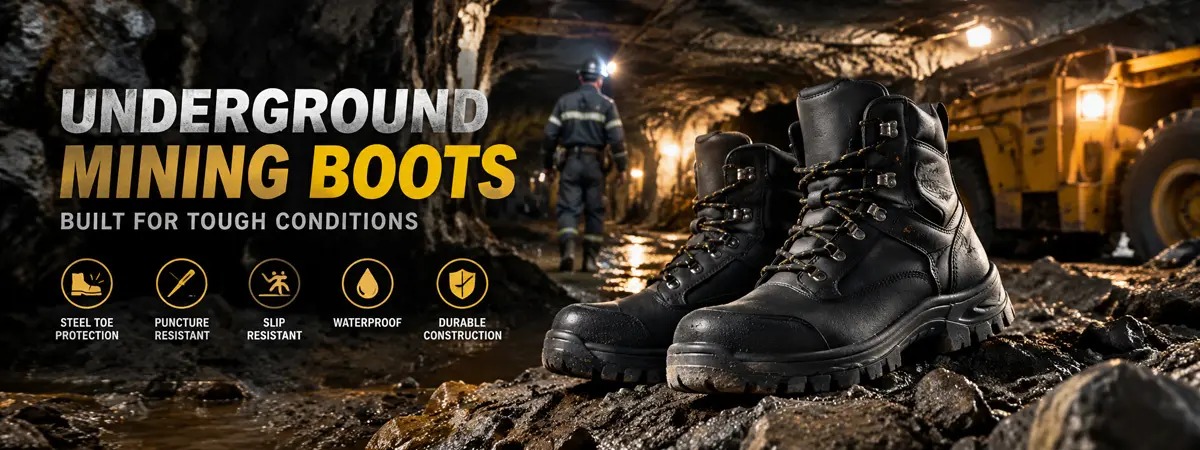
This is why choosing the right Underground Mining Boots matters. The right pair does more than cover your feet. It helps protect against common workplace hazards, provides dependable traction, and makes long hours on your feet more manageable.
For mining companies, suitable Underground Mining Boots are also an important part of a broader workplace safety plan. Different mining jobs come with different risks, so footwear should match the actual working conditions rather than simply look tough.
Let’s take a closer look at six important benefits of Underground Mining Boots, along with the features worth checking before making a purchase.
| Product | Main Protective Features | Suitable Work Environments |
|---|---|---|
| MK0830 | Steel toe cap, reinforced ankle area, rubber construction | Rugged terrain, mining, quarrying, construction |
| MK0811 | Stainless steel toe cap, steel midsole, slip-resistant grip, impermeable construction | Wet tunnels, muddy areas, underground maintenance |
| MK0809 | Steel toe cap, puncture-resistant steel midsole, non-slip and high-temperature-resistant PVC outsole | Humid mines, wet work areas, demanding industrial environments |
Underground Mining Boots Help Protect Your Feet from Unexpected Hazards
Underground mines are busy working environments. Heavy tools may be moved through confined spaces, rocks can fall from nearby surfaces, and equipment may operate only a short distance from workers. A moment of distraction or an unexpected incident can put feet at risk.
Suitable Underground Mining Boots can help reduce these risks when they are equipped with the right protective features.
For example, protective toe caps can help guard against impact and compression from falling objects or heavy materials. In areas where sharp rocks, metal fragments, or other penetrating hazards may be present, boots with a verified puncture-resistant midsole can provide an additional layer of protection.
The important point is that not every pair of Underground Mining Boots offers the same protection. A boot designed for general industrial work may not meet the requirements of a particular mining operation.
Before choosing footwear, consider what workers handle, how materials are transported, and whether there are risks from falling objects or sharp debris. Check the product specifications and relevant test reports to confirm that the selected boots provide the required level of protection.
When workers know their footwear has been selected for the hazards around them, they can focus more confidently on the job instead of worrying about every step.
Underground Mining Boots Provide Better Grip on Slippery, Uneven Ground
A dry, level floor is not something miners can always count on. Water may collect in low areas, mud can build up along walking routes, and loose stones may shift underfoot. Add heavy equipment, limited space, and poor visibility in certain areas, and moving around safely becomes even more important.
This is where the outsole of Underground Mining Boots deserves special attention.
A well-designed outsole with a suitable tread pattern can help improve traction on the surfaces for which it is designed. Deep lugs may be useful on certain rough or muddy routes, while the rubber compound and overall sole design can affect how the boots perform under different conditions.
However, more aggressive tread does not automatically mean better grip everywhere. An outsole that performs well on loose ground may behave differently on smooth, wet surfaces. Buyers should therefore consider the actual floors and terrain workers encounter instead of judging boots by appearance alone.
For mining operations with frequent moisture exposure, selecting appropriate Underground Mining Boots can be one practical step toward reducing slip-related risks. Keeping walkways clear, managing water accumulation, maintaining good lighting, and following site safety procedures are equally important.
The goal is simple: workers should be able to move around the mine with footwear suited to the ground beneath their feet.
Underground Mining Boots Make Long Shifts More Comfortable
A mining shift can involve far more walking and standing than people outside the industry might expect. Workers may move between operating areas, inspect equipment, transport tools, or remain on their feet for extended periods.
By the middle of a long shift, poorly fitted boots can become a serious distraction. Tight toe boxes, stiff materials, insufficient cushioning, and excessive weight may leave feet feeling sore and tired.
Comfortable Underground Mining Boots help address these everyday problems through practical design features.
A proper fit gives toes enough room without allowing the foot to slide around inside the boot. Suitable cushioning can help improve comfort during standing and walking, while supportive construction can make the boots feel more secure. Depending on the work environment, lining materials that help manage moisture may also be useful.
Weight is another factor worth considering. Heavy-duty protection is important, but footwear should also allow workers to move naturally throughout the day. The best choice is not necessarily the heaviest boot; it is the one that provides the required protection without creating unnecessary discomfort.
When selecting Underground Mining Boots, companies should pay attention to sizing and fit as well as protective specifications. Offering a suitable range of sizes helps workers find footwear that feels secure without squeezing the toes or rubbing against the heel.
Comfort alone cannot prevent workplace injuries, but it can make demanding shifts more manageable. When boots fit properly and suit the job, workers have one less everyday problem to deal with.
Underground Mining Boots Are Built for Tough Working Conditions
Mining footwear faces constant wear. Boots may rub against rough rock, bend repeatedly while workers walk and climb, and come into contact with water, mud, dust, and industrial materials.
Ordinary footwear may not be suitable for this kind of daily punishment. Durable Underground Mining Boots are designed with demanding work environments in mind, although the level of durability varies by model.
When comparing boots, look closely at the upper materials, stitching, outsole construction, and areas that experience repeated friction. Reinforced sections and hard-wearing materials may help the boots withstand regular use, while a securely attached outsole is essential for dependable performance.
Durability matters for more than appearance. When footwear wears out too quickly, workers may need replacements more often, and procurement teams must spend additional time arranging new orders. Choosing appropriate Underground Mining Boots can help companies manage these practical challenges.
Still, no boot lasts forever. Service life depends on the working environment, frequency of use, care practices, and product construction. A pair used every day on abrasive surfaces may wear differently from one used in a less demanding area.
Regular inspections are therefore worth making part of the routine. Check for worn tread, loose soles, damaged uppers, cracks, and signs that protective components may have been compromised. If the boots no longer provide the protection required for the job, they should be replaced.
A durable pair of Underground Mining Boots is a practical investment when its construction matches the conditions in which it will be used.
Underground Mining Boots Help Keep Feet Dry in Wet Conditions
Water and mud can turn an ordinary working day into an uncomfortable one. In underground mines, damp walking routes and standing water may expose footwear to moisture repeatedly throughout a shift.
Wet feet can cause discomfort, and moisture entering the boot may make it harder for workers to stay comfortable during long hours of activity. Choosing the right Underground Mining Boots can help address this problem.
Water-resistant boots may be suitable for limited exposure to moisture, while waterproof designs are intended for more demanding conditions when their specifications support that use. These terms should not be treated as interchangeable. Buyers need to confirm the manufacturer’s stated level of water protection and any limitations.
The upper material, seams, construction, and sole design can all influence how well a boot handles moisture. It is also worth considering how easily the boots can be cleaned and dried after a shift.
For particularly wet mining areas, Underground Mining Boots should be selected according to the expected duration and level of water exposure. Workers who move between wet and dry areas may have different needs from those who regularly work around standing water.
Remember that waterproof footwear is not automatically suitable for every wet environment. Traction, fit, durability, and other protective requirements still matter. A boot that keeps water out but provides unsuitable grip is not the right solution for a slippery work area.
By checking these features together, mining companies can choose Underground Mining Boots that offer a more suitable balance of moisture protection and everyday practicality.
Underground Mining Boots Support Stable Movement and Greater Confidence
Underground work often requires careful movement through confined spaces, around machinery, and over uneven ground. Workers may need to change direction, step over obstacles, climb short access routes, or carry equipment while walking.
Footwear that fits poorly or feels unstable can make these ordinary movements more difficult. Suitable Underground Mining Boots can help workers feel more secure when the design matches the demands of the job.
An appropriate outsole can support traction on intended surfaces. A secure fit helps reduce unnecessary movement inside the boot, while ankle coverage and supportive construction may be useful for certain tasks. These features should be evaluated as part of the complete boot design rather than assumed to guarantee injury prevention.
Mobility matters, too. Boots that feel excessively stiff or heavy may be uncomfortable during frequent walking, while footwear that lacks the necessary protection may be unsuitable for hazardous areas. The aim is to find Underground Mining Boots that balance protection, comfort, and movement.
Different workers may also have different requirements. Equipment operators, maintenance technicians, and workers who travel extensively through tunnels may face different combinations of hazards. Selecting footwear according to the task helps ensure that protective features are relevant rather than excessive or insufficient.
When workers have footwear that fits well and suits the environment, everyday movement can feel more manageable. Combined with proper training, clear walking routes, and safe working practices, suitable Underground Mining Boots can contribute to a more confident working experience.
What Should You Check Before Buying Underground Mining Boots?
Choosing mining footwear is not simply a matter of comparing prices or picking the toughest-looking design. A boot needs to suit the hazards, ground conditions, and working routines of the people who will wear it.
Before purchasing Underground Mining Boots, consider these important factors:
- Toe protection: Confirm whether the job requires protective toe caps and check the relevant impact or compression rating.
- Puncture resistance: Consider whether workers face sharp rocks, metal fragments, or other penetrating hazards.
- Outsole grip: Select a tread and sole design appropriate for the actual walking surfaces.
- Water protection: Decide whether water resistance is sufficient or a waterproof design is needed.
- Comfort and fit: Check toe room, heel fit, cushioning, weight, and available sizes.
- Material durability: Review the upper, stitching, sole attachment, and expected wear conditions.
- Chemical or oil exposure: If workers may encounter these substances, verify that the materials and outsole are suitable for the specific exposure.
- Verified standards: Review applicable safety standards, product markings, and test reports instead of relying on general product descriptions.
- Maintenance requirements: Consider how the boots should be cleaned, inspected, stored, and replaced.
It is also useful to involve workers in the selection process. They understand the routes they walk, the equipment they handle, and the discomfort that can develop during a long shift. Their feedback can help identify whether a particular pair of Underground Mining Boots is practical for daily use.
For bulk purchases, confirming sizing, product availability, sample arrangements, and delivery schedules in advance can also make procurement easier.
MKsafety® – MK0830 Yellow High-Quality Strong Steel Toe Rubber Boots
Content Nav

Product Advantages
-
Durable rubber construction for demanding working environments.
-
Reinforced ankle area helps reduce the risk of injury on rugged terrain.
-
Bright yellow color makes the boots easier to identify in suitable work areas.
Protective Features
-
Steel toe cap helps protect against impacts and compression from heavy objects.
-
Reinforced ankle area provides additional support on uneven ground.
-
Rubber boot construction is suitable for wet and muddy working conditions.
Suitable Mining Jobs
-
Underground miners working on rough terrain
-
Mining and quarry workers
-
Mine construction and maintenance workers
-
Workers in wet or muddy industrial areas
MKsafety® – MK0811 Black Ankle Protection Mining Safety Boots

Product Advantages
-
Durable PVC construction for demanding mining environments.
-
Ankle protection provides additional support during daily work.
-
Slip-resistant outsole helps improve grip on suitable surfaces.
Protective Features
-
Stainless steel toe cap helps protect against impacts and compression.
-
Steel midsole helps protect against sharp objects penetrating from below.
-
Impermeable construction helps keep feet dry in wet working areas.
-
Slip-resistant outsole supports safer movement on suitable surfaces.
Suitable Mining Jobs
-
Underground miners working in damp tunnels
-
Mine maintenance and inspection workers
- Workers moving through wet or muddy areas
MKsafety® – MK0809 Black Anti-Smashing Safety Steel Toe Mining Boots

Product Advantages
-
Sturdy construction for challenging mining environments.
-
Suitable for humid and wet working conditions.
-
PVC outsole provides slip resistance and high-temperature resistance as specified.
Protective Features
-
Steel toe cap helps protect against crushing and impact hazards.
-
Steel midsole helps protect against sharp objects penetrating the sole.
-
Non-slip PVC outsole helps improve traction on suitable surfaces.
-
Designed for demanding environments where durable protective footwear is needed.
Suitable Mining Jobs
-
Underground miners working in humid or wet areas
-
Workers handling mining materials and equipment
-
Mine repair and maintenance personnel
-
Workers exposed to sharp debris and impact hazards
How to Choose the Right Underground Mining Boots
- Choose MK0830 when ankle reinforcement and protection on rugged terrain are priorities.
- Choose MK0811 when workers need PVC boots with ankle protection, a steel toe cap, and a protective steel midsole for wet conditions.
- Choose MK0809 when workers need impact and puncture protection in humid environments, along with a non-slip outsole.
All three models are designed for demanding work environments. The best choice depends on the hazards at the mining site. Before purchasing, confirm the applicable safety standards, slip-resistance test results, temperature limits, and waterproof performance of each model.
Why Consider MKsafety® Underground Mining Boots?
When purchasing safety footwear for a mining team, buyers need more than a product name. They need clear specifications, suitable sizes, reliable order information, and footwear that matches the hazards workers face.
MKsafety® offers safety equipment for different workplace protection needs. When evaluating Underground Mining Boots from MKsafety®, buyers should review the available models and confirm the protective features, materials, sizes, and applicable certifications of each product.
For mining companies purchasing in bulk, it is helpful to discuss order quantities, available sizes, customization options, production lead times, and delivery arrangements before confirming an order. Requesting product documentation and samples, where available, can also help buyers assess whether the footwear meets their operational requirements.
Not every mining site needs the same type of boot. A team working mainly on rough, dry routes may have different requirements from workers exposed to standing water or specific industrial substances. The right choice depends on the actual environment and the verified capabilities of the footwear.
By comparing these details carefully, buyers can identify Underground Mining Boots that suit their workers, site conditions, and procurement plans.
Frequently Asked Questions About Underground Mining Boots
1. What are Underground Mining Boots used for?
Underground Mining Boots are safety footwear intended for mining and other demanding underground work environments. Depending on their specifications, they may provide impact protection, puncture resistance, slip resistance, and protection against moisture. The right model depends on the hazards present at the worksite.
2. What features should good Underground Mining Boots have?
Good Underground Mining Boots should fit securely, withstand the expected working conditions, and provide suitable traction. Protective toe caps, puncture-resistant midsoles, and water protection may also be necessary. Buyers should confirm the product’s tested performance rather than assume every model includes these features.
3. Are all Underground Mining Boots waterproof?
No. Some Underground Mining Boots are water-resistant, while others are designed to provide waterproof protection. The level of protection varies by product. If workers regularly encounter standing water, buyers should confirm the manufacturer’s specifications and select footwear designed for those conditions.
4. How can mining companies choose Underground Mining Boots for bulk orders?
Start by identifying the hazards workers face and the protection required for each job. Then compare fit, sizes, outsole performance, durability, water protection, certifications, and cost. Before placing bulk orders for Underground Mining Boots, confirm product availability, order quantities, delivery schedules, and relevant documentation with the supplier.
5. Why consider MKsafety® when sourcing Underground Mining Boots?
MKsafety® is an option to consider when comparing workplace safety equipment suppliers. Buyers should confirm the availability of suitable Underground Mining Boots, review the product specifications and certifications, and discuss sizing, samples, order quantities, and delivery terms before purchasing.