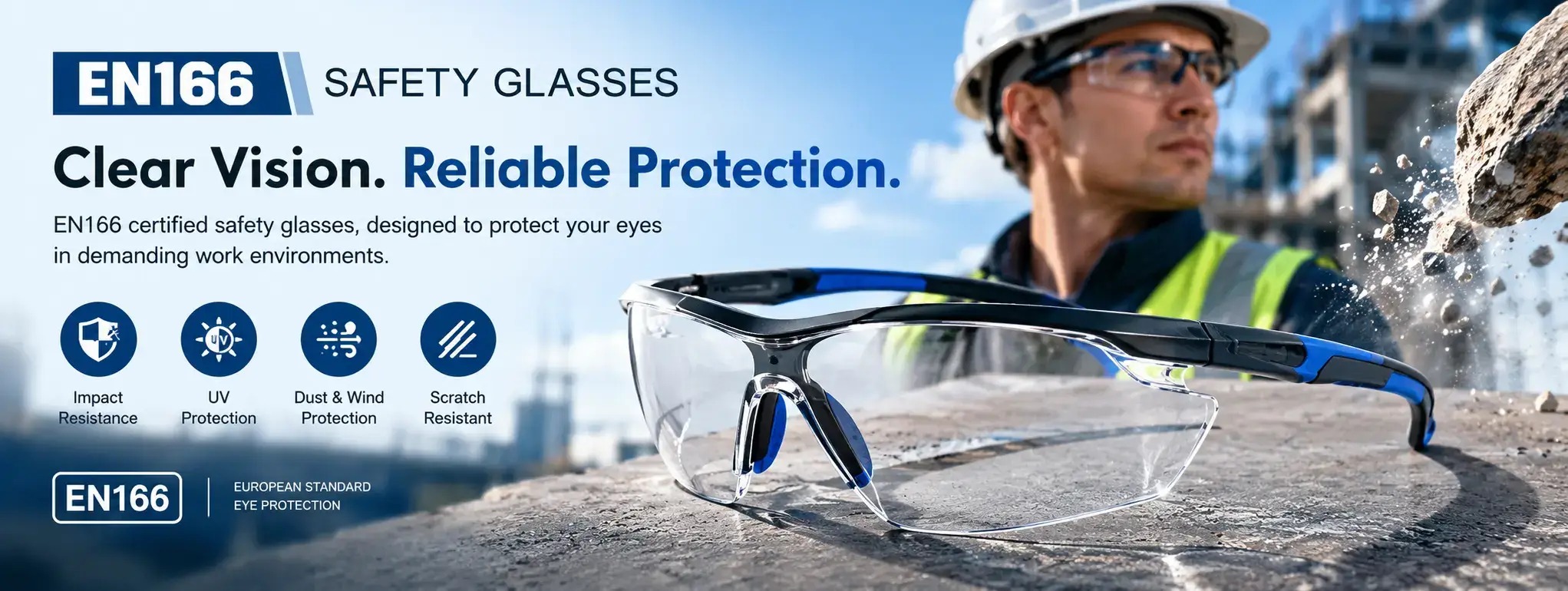
A tiny flying particle, a cloud of dust, or an unexpected splash can turn an ordinary workday into a serious problem. Whether on a busy construction site, in a factory, or in a workshop, workers need eye protection they can rely on.
That’s where EN166 Safety Glasses come in. The right protective eyewear helps reduce exposure to specific workplace hazards while allowing workers to focus on the job at hand. For businesses buying PPE, the goal is simple: find safety glasses that offer suitable protection, feel comfortable throughout the day, and stand up to regular use.
Before choosing EN166 Safety Glasses, it is worth looking beyond price and appearance. Lens clarity, fit, durability, and verified safety compliance all matter. Let’s explore five reasons why the right pair can make a real difference at work.
| Comparison Item | MK-G006 | MK-G004 | MK-G003 |
|---|---|---|---|
| Product Category | Safety glasses | Safety glasses | Safety glasses |
| Main Purpose | Workplace eye protection | Workplace eye protection | Workplace eye protection |
| Potential Applications | Construction, manufacturing, maintenance | Industrial operations, construction, workshops | Construction, automotive, facility maintenance |
| Key Selection Factors | Lens type, fit, coverage, protection rating | Lens performance, frame design, applicable standards | Material, coverage, fit, maintenance requirements |
| Information to Confirm | Impact resistance and lens specifications | Product markings and test documentation | Lens and frame materials, tested performance |
Keep Flying Particles Away from Your Eyes
Cutting, drilling, grinding, and handling materials can send small particles into the air without warning. Even routine tasks may expose workers to eye hazards, making suitable protective eyewear an important part of everyday PPE.
EN166 Safety Glasses designed and tested for the relevant impact hazards can help protect workers from certain flying particles. Wraparound frames or side protection may provide additional coverage, depending on the product design.
Different jobs, however, call for different levels of protection. Basic safety glasses may be suitable for some low-risk tasks, while high-speed grinding, heavy dust, or liquid splashes may require goggles or specialized eye protection.
For buyers, the key is to match EN166 Safety Glasses to the actual working conditions. Check the product markings and technical documentation rather than assuming every pair offers the same level of protection.
See Clearly and Stay Focused on the Job
When workers struggle with blurry lenses, glare, or fogging, even simple tasks can become frustrating. Clear vision helps employees concentrate, handle tools more accurately, and work with greater confidence.
Good-quality EN166 Safety Glasses should provide appropriate optical clarity for their intended use. Clear lenses are often a practical choice for indoor workplaces, while suitable tinted lenses may help manage bright outdoor conditions.
Fogging is another common annoyance, especially when workers move between different temperatures or work in humid environments. If this is a concern, look for EN166 Safety Glasses with a verified anti-fog feature.
Not every model includes the same lens treatment, so check the specifications before ordering. The right combination of lens clarity and comfort can make protective eyewear easier to wear throughout a shift.
Stay Comfortable from the First Hour to the Last
Safety glasses are only useful when workers wear them properly. Heavy frames, uncomfortable nose supports, or arms that press against the head can quickly become irritating during a long shift.
When comparing EN166 Safety Glasses, look for a lightweight design, a suitable fit, and features that help keep the glasses in place during normal movement. Adjustable temples and well-designed nose supports may improve comfort for different users.
It’s also important to think about the rest of the PPE. Workers may need to wear safety helmets, hearing protection, respirators, or face shields at the same time. The chosen EN166 Safety Glasses should fit comfortably alongside this equipment without interfering with its intended protective function.
For companies purchasing eyewear for an entire team, checking fit and comfort before placing a large order can prevent avoidable problems later. A pair that feels right is more practical for everyday use.
Choose Glasses That Can Handle Everyday Work
Safety eyewear can take a beating. It may be picked up and put down dozens of times, exposed to dust, cleaned regularly, or carried between work areas. A durable design can make everyday use easier to manage.
When selecting EN166 Safety Glasses, pay attention to frame construction, lens material, and the manufacturer’s stated performance. A sturdy appearance alone does not prove that eyewear meets the necessary safety requirements, so always review the relevant product information.
A little care also goes a long way. Clean the lenses according to the manufacturer’s instructions, store the glasses in a suitable place, and inspect them regularly for scratches, cracks, or loose parts.
Scratched lenses can affect visibility, while damaged frames may compromise the intended fit or protection. Replace damaged EN166 Safety Glasses in accordance with the manufacturer’s guidance and workplace procedures.
For businesses, consistent product specifications and clear replacement procedures can make PPE management much easier, particularly when supplying multiple teams or work locations.
Find the Right Protection for Your Industry
Not every workplace presents the same eye hazards. Choosing suitable EN166 Safety Glasses starts with understanding what workers do and what they may be exposed to.
Construction: Ready for Dust and Debris
Content Nav
Construction workers often deal with drilling dust, flying particles, and debris during installation and maintenance. Suitable EN166 Safety Glasses can help protect against relevant impact hazards when the selected model is designed for the task.
For heavy dust or particles that can enter around the frame, goggles or additional protection may be a better choice.
Manufacturing: Protection on the Production Floor
Manufacturing workers may encounter particles from machinery, tools, and material handling. The right EN166 Safety Glasses should match the risks associated with each production process.
If the job involves chemical splashes, high-speed grinding, or other serious hazards, ordinary safety glasses may not be enough. A workplace risk assessment can help determine whether specialized eyewear is needed.
Laboratories: Match Eyewear to the Procedure
Laboratory work can involve splashes, particles, and potentially hazardous substances. The appropriate eye protection depends on the materials handled and the procedures performed.
For chemical or biological splash risks, sealed goggles or a face shield may be necessary. Do not assume that standard EN166 Safety Glasses provide complete protection against liquids or biological hazards.
Warehousing and Logistics: Comfort for Busy Shifts
Warehouse and logistics workers may encounter dust, packaging debris, and particles while moving goods or handling equipment. Lightweight EN166 Safety Glasses may be suitable for tasks where these hazards have been identified.
Comfortable fit and clear vision are particularly useful for workers who move frequently between different areas.
Automotive Repair: Keep an Eye on the Details
Automotive technicians may face dust, metal particles, and debris during vehicle inspection and repair. Suitable EN166 Safety Glasses can help protect against certain hazards when selected for the task.
Work involving battery fluids, chemical cleaners, or high-speed grinding may require specialized goggles or additional protection. Always check the product’s intended use before making a choice.
Before You Buy: 7 Things Worth Checking
Choosing EN166 Safety Glasses doesn’t need to be complicated, but a few checks can help you avoid the wrong purchase.
- The actual safety standard: Check product markings, conformity claims, and supporting documentation. EN 166 is an older European standard, and the EN ISO 16321 series has been introduced as a newer framework. Confirm which requirements apply to the product and target market.
- The hazard you’re dealing with: Dust, flying particles, liquid splashes, and optical radiation require different protection. One pair of glasses may not cover every risk.
- Lens clarity and features: Consider clear or tinted lenses, anti-fog performance, and any task-specific requirements.
- Comfort and fit: Check frame weight, nose support, temple design, and suitability for different face shapes.
- Compatibility with other PPE: Make sure the glasses work with helmets, respirators, hearing protection, or face shields.
- Cleaning and replacement: Understand how to care for the lenses and when damaged eyewear should be replaced.
- Bulk order details: Confirm availability, order quantities, delivery schedules, and customization options with the supplier.
Taking time to check these details helps you choose EN166 Safety Glasses that fit the job, rather than simply choosing the cheapest or most attractive model.
1. MKsafety® – MK-G006 Safety Glasses

Product Advantages
-
Reliable Eye Protection: Designed to help protect workers’ eyes from workplace hazards when selected for the specific task.
-
Versatile Applications: Suitable for consideration across construction, manufacturing, maintenance, and other work environments.
-
Practical for Daily Use: Safety glasses are an important part of everyday personal protective equipment (PPE).
-
Supports Workplace Safety: Helps businesses address eye-protection needs as part of their overall safety procedures.
Protective Performance and Key Features
-
Particle Protection: Appropriate safety glasses can help protect against certain flying particles and debris.
-
Workplace Adaptability: The suitable lens type and frame design depend on the working environment and identified hazards.
-
Additional Protection Options: Specialized lenses or designs may be needed for glare, optical radiation, dust, or liquid splashes. Actual capabilities must be verified against product specifications.
-
PPE Compatibility: Should be selected to fit appropriately alongside other protective equipment.
Suitable Industries and Occupations
-
Construction: Construction workers, installation personnel, and site maintenance teams.
-
Manufacturing: Production workers and machine operators exposed to relevant eye hazards.
-
Automotive Repair: Vehicle maintenance technicians and repair personnel.
-
Warehousing and Logistics: Workers handling materials in environments where eye hazards have been identified.
-
Outdoor Work: Maintenance crews and other outdoor workers who require suitable eye protection.
2. MKsafety® – MK-G004 Safety Glasses

Product Advantages
-
Everyday Eye Protection: Provides an option for workplaces where protective eyewear is required.
-
Multiple Workplace Applications: Can be considered for industrial operations, maintenance work, and other suitable tasks.
-
Supports Worker Safety: Helps reduce exposure to specific eye hazards when the eyewear is appropriate for the job.
-
Suitable for PPE Procurement: Can be evaluated by businesses looking for safety glasses for individual workers or larger teams.
Protective Performance and Key Features
-
Protection Against Certain Particles: Safety glasses designed and tested for the relevant hazards can help reduce the risk of eye injuries from flying particles.
-
Lens Selection: Lens type should match the lighting conditions and the task being performed.
-
Task-Specific Protection: Work involving chemicals, fine dust, or high-energy impact may require goggles or specialized protective eyewear instead.
-
Standards Verification: Product markings and technical documentation should be checked to confirm the applicable protection level.
Suitable Industries and Occupations
-
Industrial Manufacturing: Assembly workers, production staff, and equipment operators.
-
Construction and Renovation: Workers performing suitable installation, inspection, and maintenance tasks.
-
Equipment Maintenance: Technicians working with tools and machinery.
-
Laboratories: Personnel performing tasks for which the selected eyewear provides adequate protection.
-
General Workshop Operations: Workers exposed to relevant particles or other identified eye hazards.
3. MKsafety® – MK-G003 Safety Glasses

Product Advantages
-
Practical PPE Solution: Provides an option for businesses evaluating protective eyewear for their workforce.
-
Broad Potential Applications: Safety glasses may be suitable for various work environments, depending on their verified performance.
-
Helps Reduce Eye-Hazard Exposure: Appropriate eyewear can help protect workers from specific hazards encountered during daily tasks.
-
Supports Workplace Safety Management: Can form part of a broader PPE program alongside suitable training and safety procedures.
Protective Performance and Key Features
-
Eye Protection: Helps protect the eyes when the product is selected according to the relevant workplace risks.
-
Material and Design Considerations: Lens material, frame structure, coverage, and fit should be confirmed using the product’s technical specifications.
-
Different Hazard Requirements: Additional protection may be necessary for chemical splashes, intense light, or high-impact tasks.
-
Maintenance and Inspection: Regularly inspect the glasses for scratches, cracks, and other damage that may affect visibility or protective performance.
Suitable Industries and Occupations
-
Construction: Site workers and building maintenance personnel.
-
Manufacturing and Processing: Production staff and workers handling materials.
-
Automotive Industry: Mechanics and vehicle inspection technicians.
-
Logistics and Warehousing: Workers performing tasks with identified eye hazards.
-
Facility Maintenance: Maintenance technicians and general industrial service personnel.
How to Choose the Right MKsafety® Safety Glasses
When comparing MK-G006, MK-G004, and MK-G003, buyers should review the actual product specifications rather than assuming that the three models have identical performance.
-
Identify the workplace hazards: Determine whether workers face flying particles, dust, chemical splashes, or optical radiation.
-
Check the product documentation: Confirm applicable standards, markings, and test reports.
-
Consider fit and coverage: Ensure the eyewear fits appropriately and provides suitable coverage for the task.
-
Check compatibility: Make sure the glasses can be used with other required PPE.
-
Plan for maintenance: Establish inspection, cleaning, and replacement procedures.
Important note: Safety glasses do not automatically provide protection against every chemical, radiation source, or workplace hazard. The specific protective capabilities of MK-G006, MK-G004, and MK-G003 should be confirmed using MKsafety® product specifications and supporting test documentation before purchase.
Looking for Safety Glasses for Your Team? Consider MKsafety®
Finding suitable PPE is easier when you have clear product information and know what your workers need. MKsafety® offers personal protective equipment for different occupational environments, giving buyers options to explore for their workplace requirements.
If you’re considering EN166 Safety Glasses for your team or distribution business, start by identifying the main hazards and the features you need. Think about lens type, frame design, comfort, and compatibility with other PPE.
Before ordering, ask MKsafety® about available models, product specifications, applicable standards, test documentation, stock availability, and bulk purchasing requirements. If you need a large quantity, confirm delivery lead times and any customization options in advance.
The best choice isn’t simply the pair with the longest feature list. It’s the eyewear that matches the job, provides the required protection, and works comfortably for the people wearing it.
EN166 Safety Glasses: Answers to Common Buyer Questions
1. What Are EN166 Safety Glasses?
EN166 Safety Glasses are protective eyewear associated with the former European EN 166 standard for personal eye protection. Since newer standards, including the EN ISO 16321 series, have been introduced, buyers should verify the product’s actual markings and supporting documentation.
2. Which Industries Commonly Need Safety Glasses?
Construction, manufacturing, laboratories, warehousing, automotive repair, and maintenance operations commonly require eye protection. The right eyewear depends on the hazards workers face during their tasks.
3. Can EN166 Safety Glasses Protect Against Chemical Splashes?
Not all models can. Ordinary safety glasses may leave gaps around the eyes. Where chemical splashes are possible, sealed goggles or a face shield may be necessary, depending on the risk assessment.
4. How Do I Choose the Right Safety Glasses?
Start by identifying the workplace hazards. Then compare the product’s protection ratings, lens type, fit, comfort, compatibility with other PPE, and technical documentation. Make sure the selected eyewear meets the requirements for the intended application and market.
5. Can I Buy Safety Glasses in Bulk from MKsafety®?
You can contact MKsafety® to ask about available models, bulk order requirements, product specifications, delivery schedules, and possible customization options. Confirm the details with the supplier before placing your order.
Make Eye Protection Part of Every Workday
A small eye hazard can have a big impact, but choosing the right protective eyewear is a practical step toward reducing workplace risks. Suitable EN166 Safety Glasses can help protect workers from specific hazards while supporting clear vision and comfortable wear.
For employers and buyers, the priority is to find eyewear that meets the needs of the job. Check the safety documentation, consider comfort and durability, and make sure the glasses work with the rest of the required PPE.
Whether you’re equipping a construction crew, a production team, a laboratory, or a maintenance department, choose protection based on the risks workers actually face. The right pair of EN166 Safety Glasses can help your team approach each workday with greater comfort and confidence.