

Safety helmet: the first line of defense to ensure life safety
Safety helmet is the most basic and important item in modern labor protection equipment, and is widely used in high-risk working environments such as construction sites, mines, and industrial production lines. Its main function is to protect the head from accidental injuries such as impact, puncture, and falling objects, to ensure that when an accident occurs, head injuries are minimized to the greatest extent and the life safety of workers is guaranteed.
Basic structure of safety helmet
Content Nav
Safety helmets usually consist of the following parts:
Hood shell: The outer layer of the safety helmet, usually made of high-strength materials such as polycarbonate, ABS plastic or composite materials, plays a protective role. It can effectively disperse external impact forces and reduce damage to the head.
Lining: The lining system is usually composed of soft pads and pads with adjustment functions, which can help the hat fit the head comfortably and effectively absorb impact forces.
Hat strap and adjustment system: Through the adjustment device, ensure that the safety helmet can be firmly fixed on the wearer’s head. It can prevent the safety helmet from falling off due to intense exercise or collision during work.
Ventilation holes: In order to increase the comfort of the wearer, many helmets are designed with ventilation holes to promote air circulation and reduce the stuffiness of the head caused by wearing a helmet.
Types and selection of helmets
There are many types of helmets according to different working environments and uses:
Construction site helmets: This type of hard hats is usually sturdy and emphasizes protection and comfort in design. It can effectively deal with objects falling from high altitudes, head collisions, etc.
Mine helmets: The working environment of mines has more dangerous factors such as high pressure, high temperature, and easy falling objects, so mine helmets are usually made of harder materials and have stronger protection.
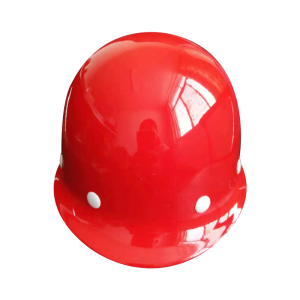
Industrial helmets: In some production plants, workers may face risks from mechanical equipment, tools, heat sources, etc., so the design of industrial helmets should take into account multiple functions such as impact resistance, high temperature resistance, and heat insulation.
Power worker helmets: Workers in the power industry may come into contact with high-voltage wires, so power workers’ helmets usually have good insulation properties to prevent electric shock accidents.
Use and maintenance of hard hats
Wear correctly: Hard hats must be worn correctly, and the straps should be adjusted to the appropriate tightness to ensure that the hard hat fits the head firmly. At the same time, damaged or aged hard hats should not be worn to avoid affecting the protective effect.
Regular inspection: During long-term use, the outer shell and lining of the construction helmet may crack or wear, and should be checked regularly for damage. If the hard hat is found to be damaged, it should be replaced in time to ensure that it continues to effectively protect the head.
Storage and cleaning: Hard hats should not be exposed to high temperatures, strong sunlight or chemicals to avoid aging of the material. When cleaning, avoid using strong acids, strong alkalis or rough cleaning tools to avoid damaging the surface of the hard hat.
The importance of hard hats
In high-risk working environments,safety hat are indispensable personal protective equipment. Its appearance not only improves workers’ early warning ability of potential dangers, but also effectively reduces the incidence of accidents at work. For example, on construction sites, one of the biggest risks faced by workers is objects falling from heights. Without the protection of a hard hat, the chance of head injury is extremely high, but with the protection of a hard hat, the risk of head injury is greatly reduced.
Globally, many countries and regions have formulated relevant laws and regulations to force workers to wear hard hats in certain dangerous environments. The use of hard hats has become an industry standard, driving all walks of life towards a safer working environment.
Summary
Whether it is construction, mining, or industrial production, hard hats are the first line of defense to protect the head from injury. It is not only a basic facility in workers’ protective equipment, but also a strong guarantee for workers’ life safety. In daily work, reasonable wearing, timely inspection and maintenance of hard hats can effectively reduce the occurrence of accidents and ensure the safety of every worker.
In the future, with the advancement of science and technology and the innovation of materials, the design and function of hard hats will be more intelligent and diversified, further improving work safety and comfort, and helping workers better deal with various potential dangers.


